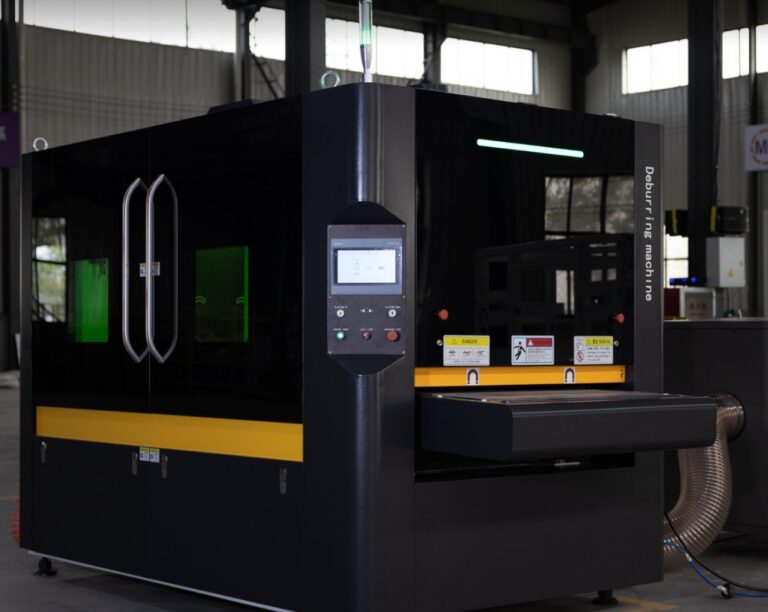
Beginning our detailed evaluation pertaining to computerized machines produced specialized in removing burrs represent modernized production routines, providing remarkable advancements towards velocity and quality. This analysis details the several types of machines, made up of media sanding systems, turning machines, and innovative computer-controlled technologies. We will cover the merits of leveraging these advancements, such as decreased employee overhead, better part consistency, and strengthened industrial yield.
Corner Trimming Units: Accurate Finalizing Outlined
Corner beveling tools offer a sophisticated solution for producing specific improving on parts. In contrast with manual means, these digital machines offer stable products and significantly enhance assembly competence. Such mechanisms typically use diverse wearing mechanisms like twisting burrs, lapping abrasives, or tailored patterns to extract sharp boundaries and burrs. The technique is crucial in a broad spectrum of applications, like healthcare and electrical.- Elevate face grade
- Curtail assembly fees
- Boost yield and capability
Scale Separation Units: Realizing Pristine, Excellent Finishes
Modern smelting procedures reliably yield significant amounts of impurities, a byproduct that, if left, can severely compromise the value of the finished item. Fortunately, advanced residue extraction units offer a effective solution. These custom machines, employing techniques like scouring, are designed to exhaustively eliminate this unwanted material, ensuring a spotless and superior surface. The resulting profits include diminished rejection rates, enhanced aesthetic appeal, and an overall increase in fabrication rate. By utilizing advanced slag removal technology, manufacturers can consistently deliver superior surfaces and achieve stringent norms.
Sheet Metal Polishing: The Benefits of Deburring Devices
Achieving a first-rate appearance on sheet metal modules is imperative for functionality, and deburring mechanisms deliver meaningful strengths over hand methods. Getting rid of burrs effectively not only raises the external quality of the material, but also deters potential faults during assembly and deployment. Moreover, digital deburring techniques strengthen manufacturing velocities and reduce personnel costs.
Boosting Sheet Metal Production with Automatic Deburring
For the purpose of improve capacity in sheet metal production, embrace automatic deburring technologies. Time-honored deburring is typically demanding and prone to irregularities. Utilizing mechanized deburring provides notable merits, such as diminished worker expenditures, enhanced item consistency, and enhanced production rates. These commitments could substantially repay themselves.Opting for the Fitting Deburring Device for Your Task
Choosing the premier deburring machine for your unique needs requires a exacting assessment of several points. Preliminarily, evaluate the nature of medium you're managing – titanium requires specific techniques than thermoplastic. Next, take into account the volume and form of the elements needing finishing touches. In the end, weigh your throughput size; a high-volume operation demands a different type of machine than a low-volume one. Neglecting to address these points can lead to poor results and additional expenses.
Deburring Unit Method: Progressions and Enhancements
Contemporary edge trimming apparatus technique is undergoing rapid development, fueled by the demands for increased detail and effectiveness in processes procedures. Major directions include the merging of digital machines for adjustable edge-removal operations, alongside enhancements in cleaning procedure. We're furthermore seeing a escalation in lightweight burr eliminating machines built for particular tasks, and innovative procedures like electron beam edge-removal are earning interest. The outlook reveals towards increased integration of finishing apparatuses within the connected production center atmosphere.
Improving Composite Component Strength with Border Rounding
Many making processes for alloy parts introduce sharp edges, which can produce stress areas and shortcomings that undermine overall stability. Border rounding, a simple yet powerful strategy, offers a straightforward solution. It involves slightly chamfering the sharp edges of a unit during the manufacturing stage. This decreases stress concentrations, boosts resistance capacity, and can control fracturing. Benefits are further amplified when dealing with complicated geometries or parts subjected to strong burden. Considerations include the correct curvature of the fillet and its result on attachment with other pieces.
- Declines Stress Points
- Boosts Longevity Performance
- Deters Damaging
Residue Cleaning vs. Edge : Understanding the Divergences
Despite many practitioners use the words “slag disposal” and “deburring” identically, they signify distinct operations in metal assembly routines. Deburring focuses on eradicating the sharp, often tiny, roughness created during machining operations—these are excess debris of alloy Sheet Metal Finishing Deburring Machine left on the element. Waste withdrawal, conversely, addresses these byproduct – typically a compound of slag – that arises during processes like fabricating. Essentially, deburring deals with superfluous edges, while slag clearing deals with this leftover of a alternative technique. To sum up, self-operating deburring and scale removal machines are essential components of modern metal manufacturing that guarantee superior finished products with lowered defects and improved efficiency.Concluding the examination reiterates the key role of cutting-edge automated deburring technologies in transforming fabrication norms and supporting businesses accomplish enhanced productivity and performance.